YOUR EYES
Three kinds of cone
About 6 million cones in each retina come in three types, tuned to short, medium and long wavelengths of light.
Colour facts doodlecolorize
Start
HOW WE SEE COLOUR
Every colour you see is your eyes and brain doing sums.
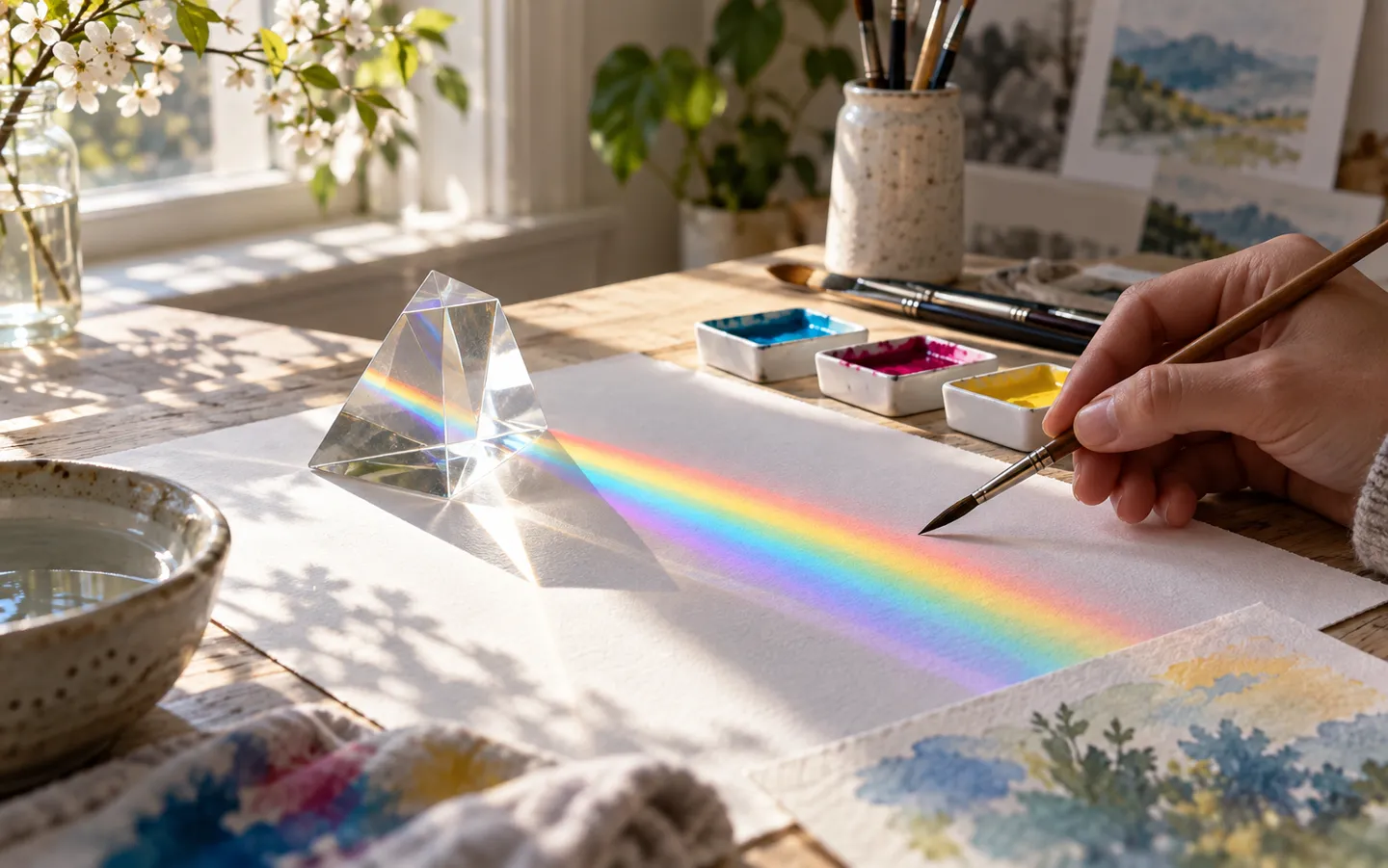
Your retina has three kinds of colour-sensing cell. Screens mix red, green and blue light to tickle them; printers lay down cyan, magenta and yellow ink to block parts of the light instead. Here is how it fits together, from Newton's prism to the colour wheel on your screen.
Plain English, with the sources linked.
R G BC M Y K
Try the colour mixerKeep in mind
THE SHORT ANSWER
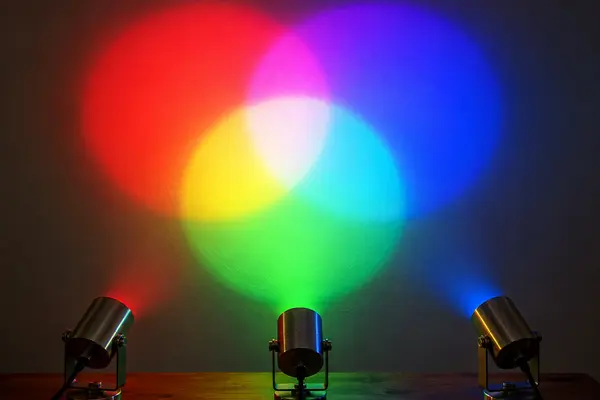
Screens add light together.
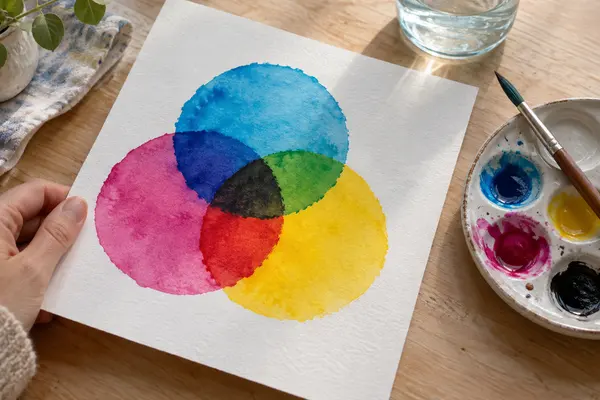
Paint and print take light away.
YOUR EYES
About 6 million cones in each retina come in three types, tuned to short, medium and long wavelengths of light.
Colour factsSCREENS · RGB
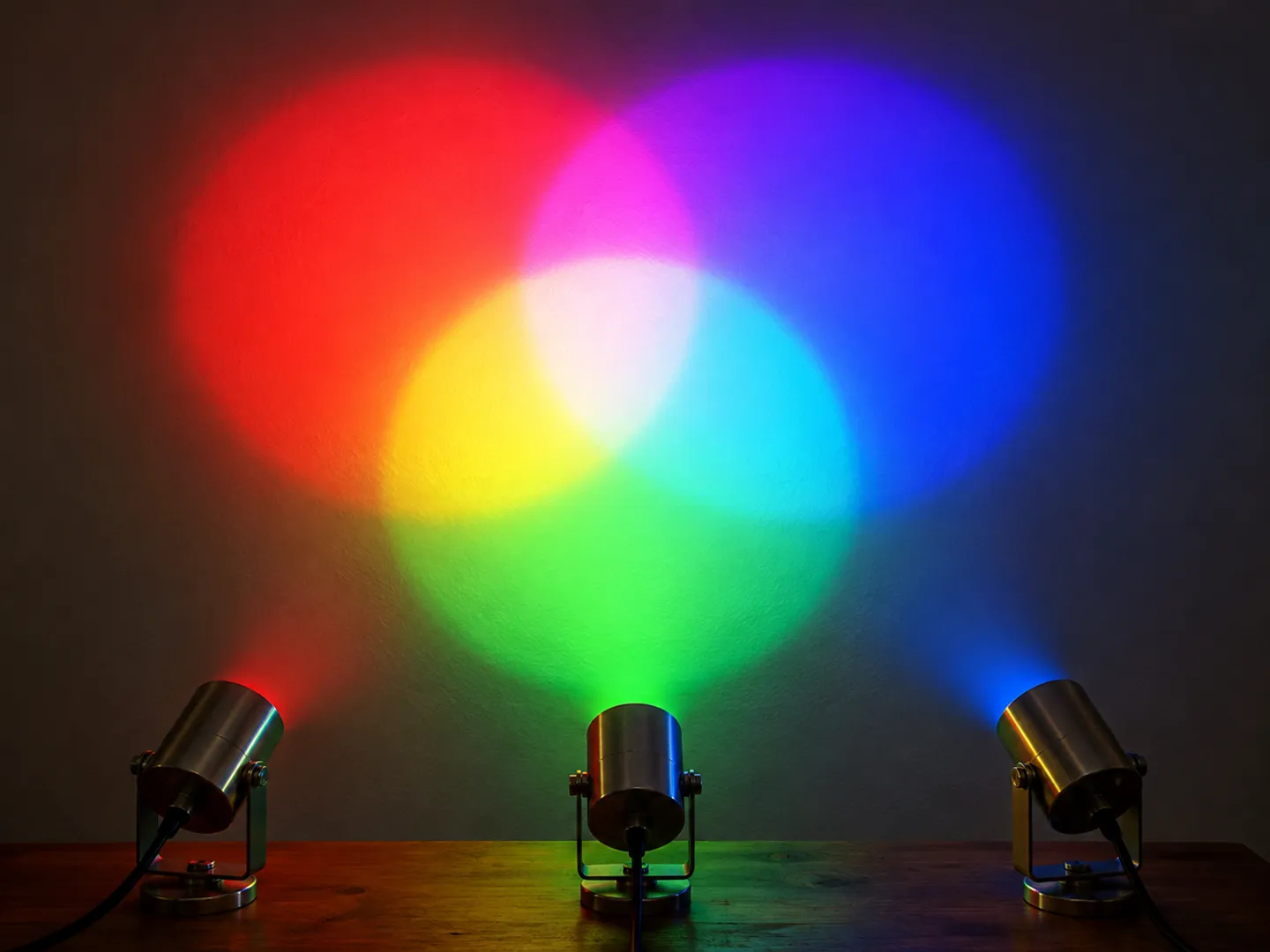
Red, green and blue light add together. Overlap all three and you get white.
See the sumsPRINT · CMYK
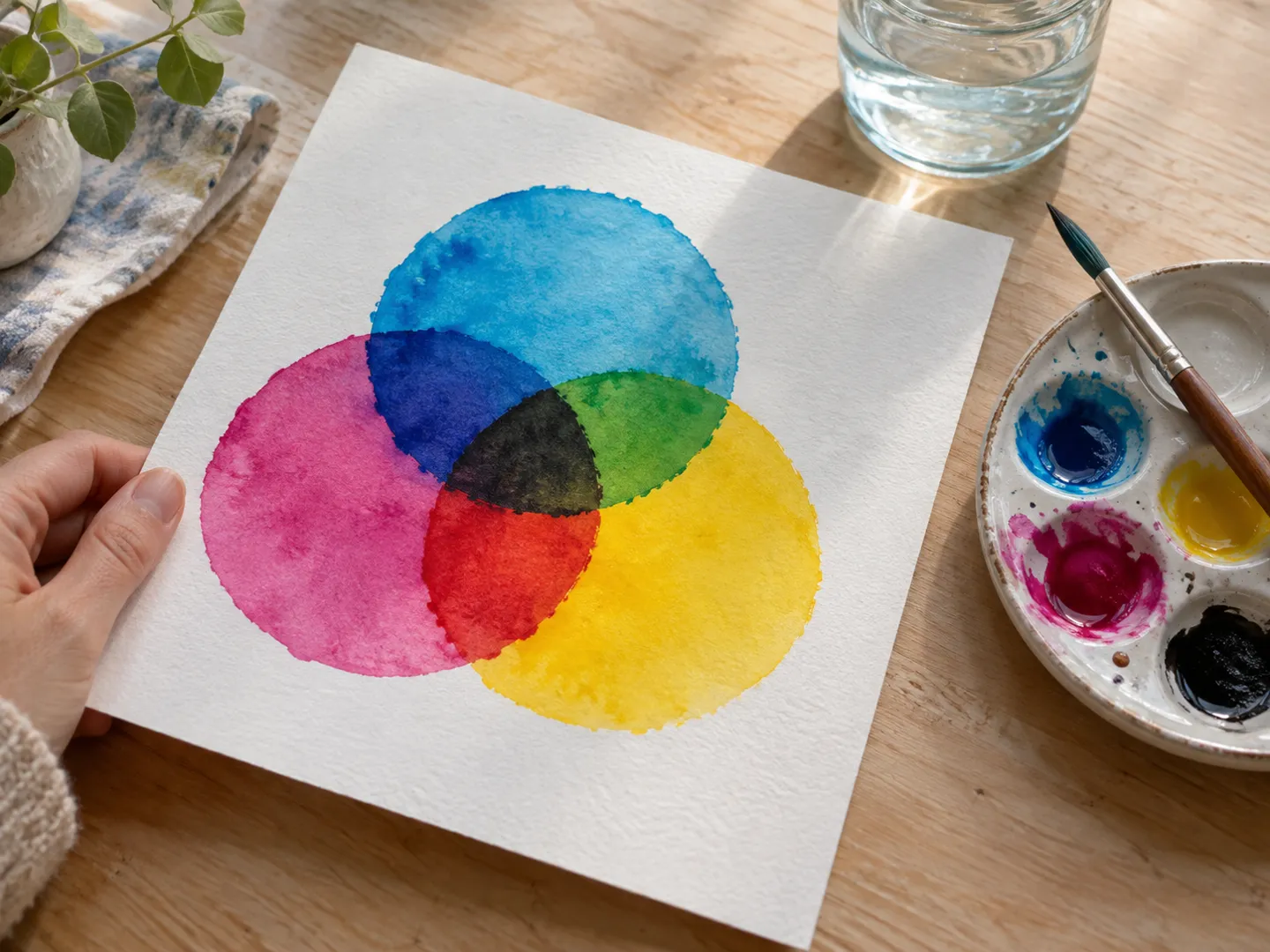
Cyan, magenta and yellow inks absorb part of the light, so each one you add makes the colour darker.
Mix some coloursA QUICK COLOUR MIXER
Pick a pair. The first three are coloured lights, as on a screen. The last three are inks or paints on white paper.
Light and ink give different answers because light adds wavelengths while ink absorbs them. The ink results are idealised: real paints are rarely this clean.
TWO KINDS OF COLOUR SUM
The same three-colour trick,
run in opposite directions.
R + G + B = white
Screens, projectors, stage lights
White light can be treated as the sum of red, green and blue. A screen starts dark and adds these three in different strengths to stimulate your three kinds of cone.
ADDITIVE · RGB
C + M + Y ≈ dark
Printing, paint, photographic film
Cyan absorbs red, magenta absorbs green and yellow absorbs blue. Overlap all three and almost all the light is absorbed, which is why printers also carry a black ink, the K in CMYK.
SUBTRACTIVE · CMYK
The two systems are mirror images: each pair of inks leaves one of the light primaries, and each pair of lights makes one of the ink primaries.
TRY IT AT HOME
Step 1
Use a magnifying glass on a white part of an older screen and you may see the tiny red, green and blue dots that add up to white.
Step 2
Brush a thin wash of yellow, let it dry, then glaze cyan over half of it. Where they overlap, you should see green.
Step 3
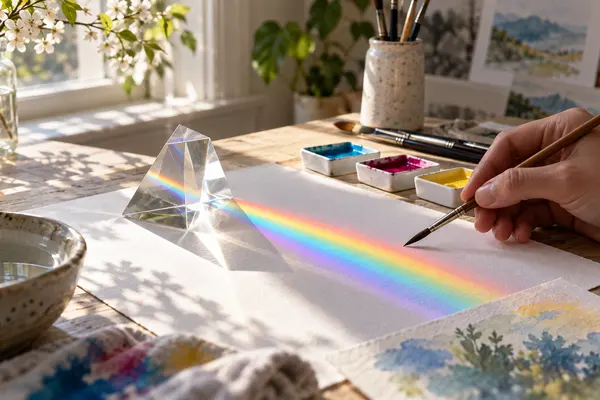
Stand a glass of water or a prism in a sunny window over white paper and look for the band of colours, as Newton did.
Step 4
About 1 in 12 men see colour differently, so never let red versus green carry a message alone. Add labels, shapes or patterns too.
COLOUR FACTS
Visible light runs from about 400 nanometres at the violet end of the spectrum to about 700 nanometres at the red end, and the limits vary a little from person to person.
The human retina has about 120 million rods, which work in dim light, and about 6 million cones, which give us colour.
Cones come in three types, short, medium and long wavelength. Thomas Young first recognised that colour vision is three-channelled at the start of the nineteenth century.
Newton used prisms to argue that white light was made of seven colours, and published his findings in Opticks in 1704. The colour circle he first devised is still widely used in colour design.
Colour vision deficiency affects about 1 in 12 men and 1 in 200 women. Most have trouble telling apart shades of red, yellow and green.
QUICK QUESTIONS
Short answers to the questions people ask most.
A screen gives off light, and coloured light adds: red, green and blue together make white. Paper only reflects light, and inks work by absorbing part of it. Cyan absorbs red, magenta absorbs green and yellow absorbs blue, so printers start from white paper and take colours away.
The human retina has about 6 million cones, which handle colour, and about 120 million rods, which work in dim light. Cones come in three types, sensitive to short, medium and long wavelengths.
Isaac Newton is credited with the first colour circle. He split white light with prisms, argued it was made of seven colours, and set out his findings in Opticks, published in 1704. The colour circle is still widely used in colour design.
Colour vision deficiency affects about 1 in 12 men and 1 in 200 women, according to NI Direct. The most common type makes it hard to tell apart shades of red, yellow and green. Blue-yellow deficiency is rare.
An optician can test colour vision, for example with the Ishihara test of coloured dots; it is not usually part of a routine eye test, but you can ask. There is no cure for the inherited form, though most people adapt to it over time.
Destination
Updated
A NAME WITH COLOUR
doodlecolorize.com is part of the DoodleSale portfolio. It isn't in an auction right now, but you can ask about leasing it.